
Architectural Guide
Exploring Historic Home Styles
Ever wondered what architectural style your home really is? From grand Victorians with gingerbread trim to cozy Craftsman bungalows built for practical living, every house has a story written into its design. Explore our collection of 30 architectural styles and see if you can spot the details that define your home — rooflines, windows, porches, woodwork, and more.
As you browse, you’ll discover how different time periods, building materials, and regional trends shaped the homes we love today. Whether your house is rich with historic character or simply inspired by a classic style, understanding its architecture can help you appreciate its unique charm — and make thoughtful choices when preserving or updating it.
If you want help identifying your home’s style, the DPA may be able to help, just send us a note and a picture of the exterior of your home.
What Style is This?
Ready to put your architectural eye to the test? Browse our Historic Properties Collection and see if you can identify the styles featured throughout these beautiful homes. From timeless Colonials to charming Craftsman details, each property offers clues that reveal its unique architectural story. You might even spot similarities to your own home along the way.
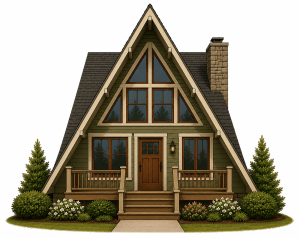
A-Frame
Emerging in popularity during the mid-20th century, A-Frame architecture is known for its dramatic triangular form and simple, efficient construction. Often associated with vacation homes and mountain retreats, the style emphasizes open interiors, natural materials, and a strong connection to the surrounding landscape.
- Steeply pitched roof forming a triangular “A” shape
- Open interior layouts with soaring ceilings
- Large front-facing windows for natural light and views
- Exposed structural beams and simple materials
- Strong connection to outdoor and recreational settings
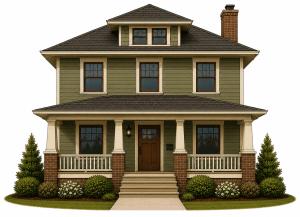
American Foursquare
Popular in the early 20th century, American Foursquare homes were designed as practical, spacious alternatives to more ornate Victorian styles. Known for their simple boxy shape and efficient layout, the style blends traditional detailing with straightforward, functional design.
- Square, two-story form with a balanced facade
- Low-pitched hipped roof with wide eaves
- Large front porch with broad steps and sturdy columns
- Symmetrical window placement with simple detailing
- Efficient four-room floor plan on each level
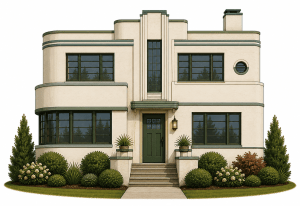
Art Moderne
Also known as Streamline Moderne, Art Moderne emerged in the 1930s as a sleek evolution of Art Deco design. Influenced by industrial design and the machine age, the style emphasizes smooth surfaces, curved forms, and horizontal lines that convey speed and modernity.
- Smooth stucco or concrete exterior surfaces
- Rounded corners and curved architectural forms
- Strong horizontal lines and streamlined detailing
- Flat roofs with minimal ornamentation
- Metal railings, glass block, and horizontal windows
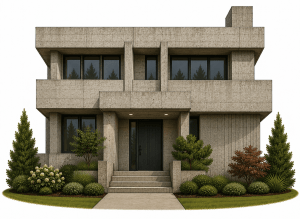
Brutalism
Emerging in the mid-20th century, Brutalist architecture emphasizes bold geometric forms, exposed materials, and a raw, monumental aesthetic. Often used for institutional and civic buildings, the style prioritizes function and structural expression over ornamentation.
- Massive, block-like forms with strong geometric shapes
- Exposed concrete or unfinished building materials
- Minimal ornamentation and utilitarian design
- Deeply recessed windows and dramatic shadows
- Emphasis on structure, scale, and functionality
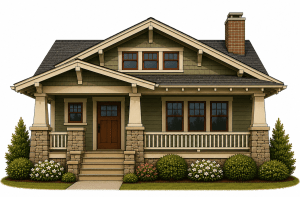
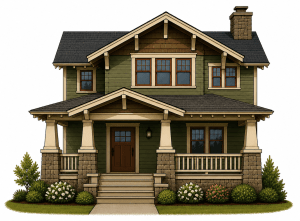
Bungalow
Popular in the early 20th century, Bungalow homes emphasize simplicity, craftsmanship, and efficient living. Often associated with the Arts and Crafts movement, the style is known for its low profile, inviting porches, and handcrafted architectural details.
- Low, compact one- or one-and-a-half-story design
- Broad front porches with tapered columns
- Low-pitched roofs with wide overhanging eaves
- Exposed rafters and decorative wood detailing
- Open interior layouts with built-in cabinetry and storage
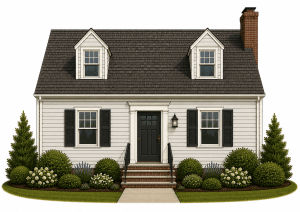
Cape Cod
Originating in colonial New England during the 17th century, Cape Cod homes are known for their simple, practical design and timeless charm. Built to withstand harsh coastal weather, the style emphasizes symmetry, steep rooflines, and efficient use of space.
- Symmetrical facade with a centered front door
- Steeply pitched side-gabled roof
- One- or one-and-a-half-story compact form
- Multi-pane windows with shutters
- Wood siding and minimal exterior ornamentation
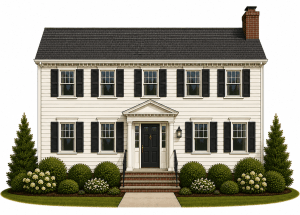
Colonial/Colonial Revival
Colonial Revival homes reinterpret traditional American colonial architecture with balanced proportions and classical detailing. The style became popular in the late 19th century.
Key Characteristics:
- Symmetrical facade
- Centered entryway
- Double-hung windows
- Side-gable roof
- Classical trim details
Craftsman
Dutch Colonial
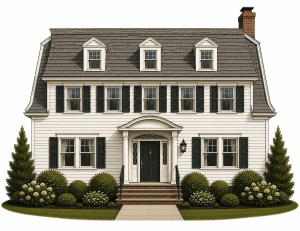
Inspired by early Dutch settlers in America, Dutch Colonial homes are known for their distinctive gambrel roofs and practical, spacious design. Popularized again during the Colonial Revival movement of the early 20th century, the style blends historic charm with comfortable family living.
- Gambrel roof with broad, sloping sides
- Symmetrical or balanced facade design
- Dormer windows that add usable upper-level space
- Wood or brick exterior materials
- Covered porches and traditional shuttered windows
English Revival
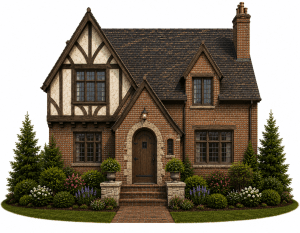
Drawing inspiration from traditional English architecture, English Revival homes blend historic European influences with romantic detailing and timeless craftsmanship. Popular in the late 19th and early 20th centuries, the style is known for its picturesque forms, steep rooflines, and old-world charm.
- Steeply pitched roofs with prominent gables
- Brick, stone, or stucco exterior materials
- Tall chimneys and decorative chimney pots
- Multi-pane windows, often grouped or casement style
- Asymmetrical facades with traditional detailing
Federal
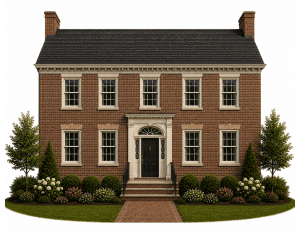
Popular in the United States from the late 18th through early 19th centuries, Federal architecture refined earlier Georgian design with lighter proportions and elegant classical detailing. Inspired by Roman and Greek influences, the style emphasizes symmetry, balance, and understated sophistication.
- Symmetrical facades with centered entrances
- Low-pitched roofs with refined proportions
- Decorative entryways with fanlights and sidelights
- Multi-pane double-hung windows arranged evenly
- Brick or wood exteriors with restrained classical detailing
Georgian
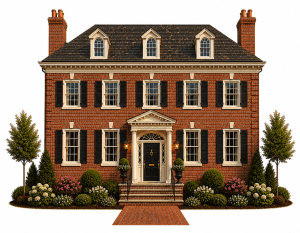
Rooted in classical European design, Georgian architecture is known for its symmetry, proportion, and understated elegance. Popular in early America during the 18th century, the style conveys a sense of order, permanence, and refinement.
- Symmetrical facade with a centered front entry
- Multi-pane, double-hung windows in a balanced grid
- Side-gabled or hipped roof
- Classical entry details like pediments, pilasters, or columns
- Brick or wood clapboard exterior finishes
Gothic Revival
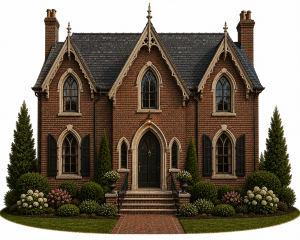
Inspired by medieval European Gothic architecture, Gothic Revival homes are known for their dramatic rooflines, ornate detailing, and strong vertical emphasis. Popular in the 19th century, the style evokes a romantic, storybook character reminiscent of historic churches and castles.
- Pointed arch windows and doorways
- Steeply pitched roofs with front-facing gables
- Decorative trim and ornate vergeboards
- Tall, narrow windows with Gothic-inspired detailing
- Asymmetrical forms with strong vertical emphasis
Greek Revival
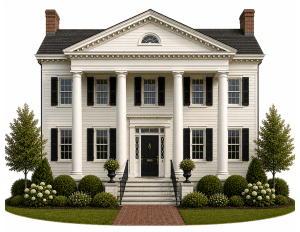
Inspired by the architecture of ancient Greece, Greek Revival became one of the most popular styles in the United States during the early to mid-19th century. The style emphasizes symmetry, bold classical detailing, and temple-like forms that convey strength and permanence.
- Prominent columns and columned entry porches
- Symmetrical facades with centered entrances
- Low-pitched gabled roofs with wide trim
- Heavy cornices and classical entablatures
- Painted wood or stucco exteriors designed to resemble stone
Italianate
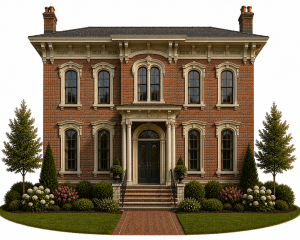
Inspired by the rural villas of Italy, Italianate architecture became widely popular in the United States during the mid-19th century. The style is known for its decorative detailing, tall proportions, and picturesque appearance that blends classical influences with romantic design.
- Low-pitched roofs with wide overhanging eaves
- Decorative brackets and ornate cornices
- Tall, narrow windows, often with arched tops
- Towers or cupolas in larger designs
- Brick, stone, or wood exteriors with elaborate detailing
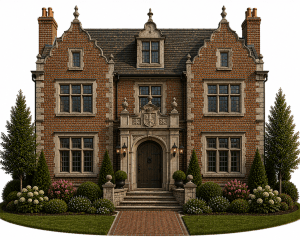
Jacobean Revival
Inspired by the architecture of early 17th-century England during the reign of King James I, Jacobean Revival architecture became popular in the late 19th and early 20th centuries. The style blends Renaissance and medieval influences, creating stately homes with elaborate detailing and dramatic rooflines.
- Steeply pitched roofs with prominent gables
- Decorative brick or stone exteriors
- Tall chimneys and grouped chimney stacks
- Mullioned or leaded glass windows
- Ornate detailing inspired by English Renaissance design
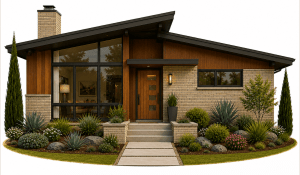
Mid-Century Modern
Emerging after World War II, Mid-Century Modern architecture embraces simplicity, functionality, and a strong connection to the outdoors. Known for its clean lines and open layouts, the style became a defining look of postwar suburban living.
- Clean lines and low, horizontal profiles
- Large windows and sliding glass doors
- Open floor plans with minimal interior walls
- Strong connection to outdoor living spaces
- Use of modern materials like glass, steel, and concrete
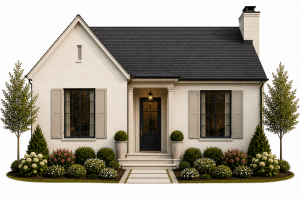
Minimal Traditional
Developed during the late 1930s and postwar era, Minimal Traditional homes emphasize simplicity, practicality, and affordability. Blending elements of earlier revival styles with streamlined design, the style became a staple of early suburban neighborhoods.
- Small, compact one- to one-and-a-half-story form
- Low- to moderately pitched side-gabled roofs
- Minimal ornamentation with simple detailing
- Asymmetrical or loosely symmetrical facades
- Modest entryways with little or no porch
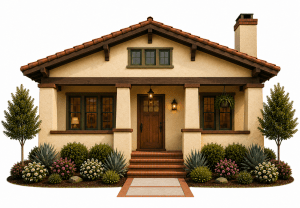
Mission Style
Inspired by the Spanish missions of California and the American Southwest, Mission Style architecture emerged in the late 19th century and emphasizes simplicity, stucco surfaces, and distinctive curved forms. The style blends Spanish Colonial influences with clean, restrained detailing and a strong connection to warm-climate living.
- Smooth stucco exterior walls
- Red clay tile roofs with broad eaves
- Curved parapets and shaped gables
- Arched windows, doors, and arcades
- Courtyards, covered walkways, and outdoor living spaces
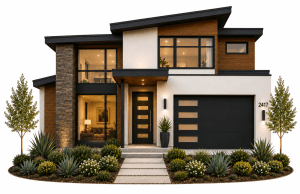
Modern
Modern architecture emerged in the early 20th century as a break from traditional architectural styles, emphasizing simplicity, functionality, and innovative construction methods. Defined by clean lines and minimal ornamentation, the style focuses on open spaces, natural light, and the honest expression of materials.
- Clean lines and simple geometric forms
- Minimal ornamentation and uncluttered design
- Open floor plans with flexible living spaces
- Large windows and strong natural light
- Use of modern materials such as steel, concrete, and glass
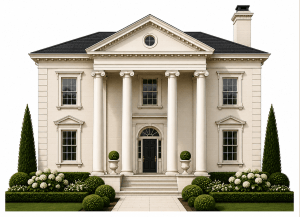
Neoclassical / Classical Revival
Inspired by the architecture of ancient Greece and Rome, Neoclassical architecture emphasizes symmetry, grandeur, and refined classical detailing. Popular in the late 19th and early 20th centuries, the style conveys a sense of permanence, elegance, and authority.
- Large-scale columns, often spanning multiple stories
- Symmetrical facades with centered entrances
- Prominent pediments and classical entablatures
- Grand porticos and formal entryways
- Stone or masonry exteriors with refined detailing
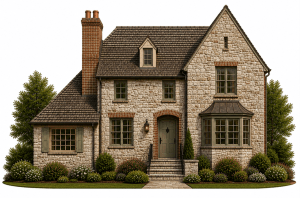
Post Medieval
Post Medieval architecture refers to transitional European building styles that emerged after the Middle Ages, blending traditional medieval forms with early Renaissance influences. Common from the 16th through 17th centuries, the style emphasizes steep rooflines, masonry construction, and evolving decorative detail rooted in historic craftsmanship.
- Steeply pitched roofs and prominent chimneys
- Brick or stone masonry construction
- Symmetrical or loosely balanced facades
- Multi-pane casement or mullioned windows
- Decorative detailing influenced by early Renaissance design
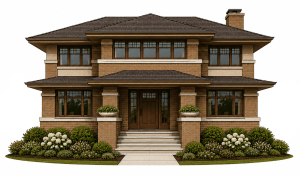
Prairie School
Developed in the American Midwest, Prairie School architecture emphasizes strong horizontal lines, open interiors, and harmony with the surrounding landscape. Popular in the early 20th century, the style helped shape the foundation of modern residential design.
- Strong horizontal lines and low, elongated forms
- Low-pitched hipped roofs with wide overhanging eaves
- Rows of windows arranged in horizontal bands
- Open floor plans with flowing interior spaces
- Designed to integrate with the natural landscape
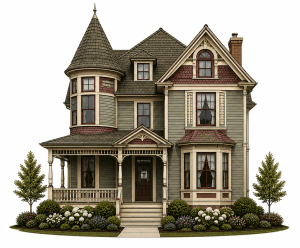
Queen Anne
A hallmark of Victorian-era design, Queen Anne architecture is known for its ornate detailing, varied textures, and picturesque forms. Popular in the late 19th century, the style celebrates individuality through asymmetrical layouts and richly decorative features.
- Asymmetrical facades with varied forms and massing
- Steeply pitched, irregular rooflines
- Prominent towers or turrets
- Decorative woodwork, including spindlework and ornate trim
- Mixed materials, textures, and bold color schemes
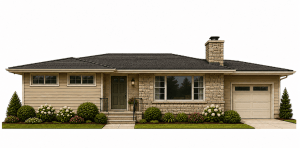
Ranch
Inspired by Spanish Colonial ranches and shaped by postwar suburban living, Ranch homes emphasize simplicity, functionality, and a seamless connection to the outdoors. Popular from the 1940s through the 1970s, the style is known for its casual, easy-living design.
- Single-story, low horizontal profile
- Open floor plans with flowing interior spaces
- Low-pitched rooflines with wide eaves
- Large windows and sliding glass doors
- Attached garages and easy access to outdoor living spaces
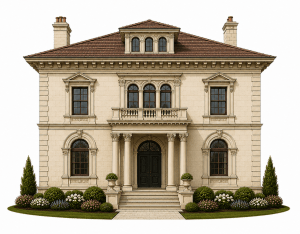
Renaissance Revival
Inspired by the architecture of the Italian Renaissance, Renaissance Revival emphasizes symmetry, classical proportion, and refined ornamentation. Popular in the late 19th and early 20th centuries, the style was often used for grand homes and civic buildings that conveyed elegance and permanence.
- Symmetrical facades with balanced proportions
- Low-pitched or flat roofs with pronounced cornices
- Arched windows and doorways, often with pediments
- Classical detailing such as columns, pilasters, and balustrades
- Stone, stucco, or other masonry construction
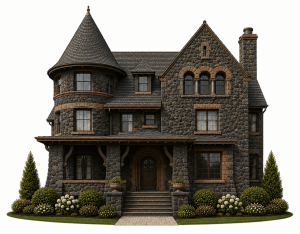
Romanesque Revival
Rooted in medieval European architecture, Romanesque design is known for its solid construction, rounded arches, and fortress-like appearance. Commonly used for churches and institutional buildings, the style emphasizes strength, simplicity, and permanence.
- Thick masonry walls and heavy construction
- Rounded arches over windows and doorways
- Small, deeply set windows
- Vaulted interior spaces, including barrel or groin vaults
- Simple, symmetrical forms with minimal ornamentation
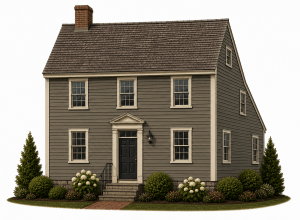
Salt Box
Originating in colonial New England during the 17th century, Saltbox homes are known for their simple, practical design and distinctive asymmetrical roofline. Built to withstand harsh northeastern winters, the style combines traditional Colonial symmetry with an extended rear roof that creates additional living space.
- Long, sloping rear roof with asymmetrical profile
- Simple rectangular form with central chimney
- Steep rooflines designed for heavy snowfall
- Wood clapboard siding and minimal ornamentation
- Multi-pane windows arranged in a balanced facade
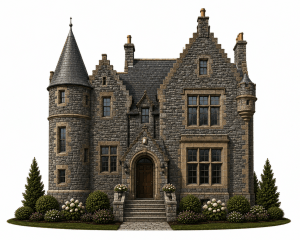
Scottish Baronial
Inspired by the castles and fortified manor houses of Scotland, Scottish Baronial architecture blends medieval defensive forms with romantic Victorian-era detailing. Popular during the 19th-century revival period, the style is known for its dramatic silhouettes, towers, and castle-like appearance.
- Towered forms with turrets and battlements
- Steeply pitched roofs and crow-stepped gables
- Stone masonry construction with castle-inspired detailing
- Tall chimneys and narrow windows
- Ornate entrances and asymmetrical compositions
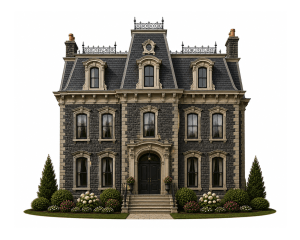
Second Empire
Originating in France during the reign of Napoleon III, Second Empire architecture became popular in the United States during the mid-to-late 19th century. The style is recognized for its ornate detailing and distinctive mansard roof, combining classical elegance with dramatic Victorian-era design.
- Mansard roof with dormer windows
- Ornate brackets, cornices, and decorative trim
- Symmetrical facades with formal proportions
- Tall windows and elaborate entryways
- Brick or stone exteriors with richly detailed ornamentation
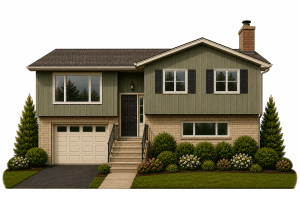
Split-Level
Popular in postwar suburban neighborhoods from the 1950s through the 1970s, Split-Level homes were designed to separate living spaces across multiple staggered floors. The style emphasizes practicality, efficient use of space, and a casual layout suited to modern family living.
- Multi-level floor plan with staggered living spaces
- Low-pitched rooflines and horizontal profile
- Attached garages integrated into the design
- Large windows and open common areas
- Blend of traditional and modern exterior materials
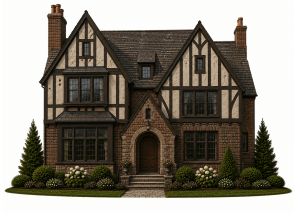
Tudor/Tudor Revival
Inspired by medieval English architecture, Tudor Revival homes are known for their romantic, old-world character and striking rooflines. Popular in the early 20th century, the style blends traditional craftsmanship with storybook charm.
- Steeply pitched gabled roofs
- Decorative half-timbering with stucco infill
- Tall, narrow windows with divided panes
- Prominent chimneys with decorative detailing
- Arched entryways and asymmetrical facades
